

01
arrow_forward
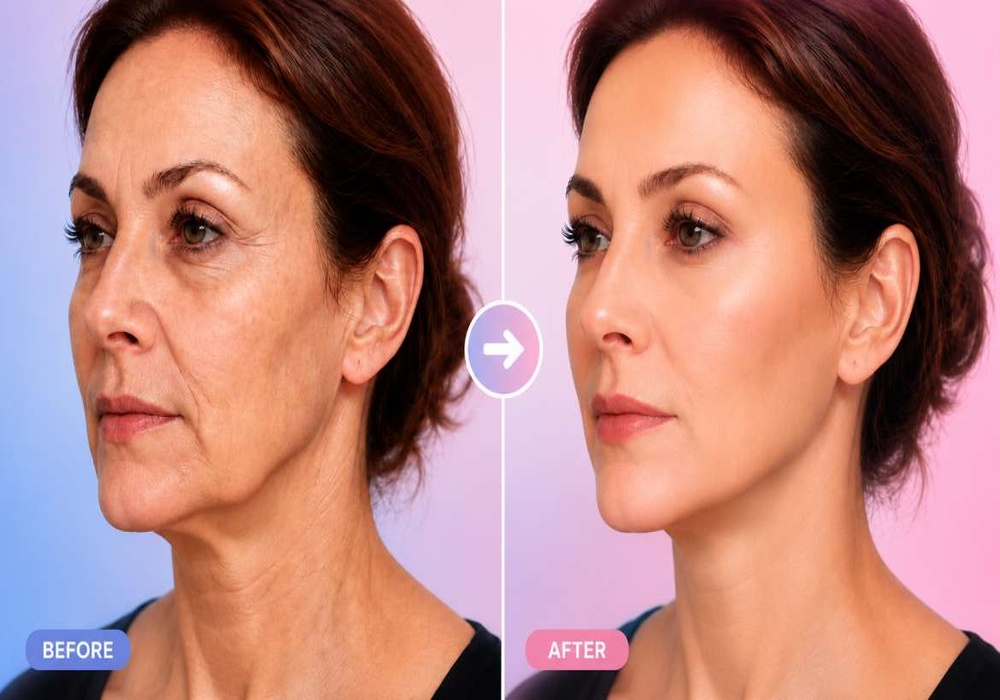
Facelift surgery (Rhytidectomy) is a cosmetic procedure that improves visible signs of facial ageing by lifting sagging skin and repositioning underlying tissues. Using advanced techniques such as SMAS and Deep Plane Facelift, the procedure delivers natural-looking, long-lasting results, with most patients recovering within 2–6 weeks.
Get expert recommendations based on your unique needs.
This overview summarises the key facts about facelift surgery, including the medical name, procedure duration, recovery timeline, hospital stay, and expected results. Use it as a quick reference before learning about the procedure, benefits, and recovery.
|
Procedure |
Facelift Surgery |
|
Medical Name |
Rhytidectomy |
|
Surgery Time |
3–5 Hours |
|
Anaesthesia |
General |
|
Hospital Stay |
1 Night |
|
Stay in Turkey |
7–10 Days |
|
Recovery |
2–6 Weeks |
|
Price |
Starting from 3500 USD |
|
Suitable For |
Moderate to severe facial ageing |
The Science Behind Facial Ageing
Facial ageing is a natural process caused by changes in the skin, muscles, fat, and underlying bone structure. As collagen and elastin production decline, facial tissues lose support, fat pads shift downward, and the skin becomes less firm. These changes, combined with gravity, genetics, sun exposure, and lifestyle factors, can lead to wrinkles, jowls, volume loss, and loose skin around the face and neck.
Collagen provides strength and structure to the skin. As collagen production decreases with age, the skin becomes thinner, less firm, and more susceptible to wrinkles and sagging.
Elastin gives the skin its ability to stretch and return to its original shape. Over time, reduced elastin causes the skin to lose elasticity, contributing to fine lines and skin laxity.
Gravity gradually pulls facial tissues downward, leading to drooping cheeks, jowls, deeper folds around the mouth, and loose skin along the jawline and neck.
The face contains natural fat pads that create youthful contours. With ageing, these fat pads lose volume and descend, causing hollow cheeks, under-eye shadows, and reduced facial fullness.
Facial bones slowly change with age, particularly around the cheeks, jaw, and eye sockets. Reduced bone support can make soft tissues appear more sunken and contribute to facial sagging.
The Superficial Musculoaponeurotic System (SMAS) is a layer of tissue that supports the facial muscles and skin. As it weakens over time, facial tissues begin to droop. Modern facelift techniques target this layer to achieve natural-looking, long-lasting rejuvenation.
Skin gradually loses firmness due to ageing, ultraviolet (UV) exposure, smoking, and other environmental
Understanding the Procedure and Available Techniques
Facelift surgery, medically known as rhytidectomy, is a cosmetic procedure that lifts and repositions sagging facial tissues, tightens the underlying SMAS (Superficial Musculoaponeurotic System), and removes excess skin to restore a firmer, more youthful facial appearance. Modern facelift techniques focus on repositioning deeper facial structures rather than simply tightening the skin, resulting in natural-looking, long-lasting facial rejuvenation. Depending on the degree of facial ageing, skin quality, and aesthetic goals, your plastic surgeon may recommend one of several facelift techniques.
A Deep Plane Facelift lifts the deeper facial tissues and ligaments beneath the SMAS layer, restoring volume to the cheeks, reducing deep nasolabial folds, improving jowls, and creating a natural-looking, long-lasting result. It is often recommended for moderate to advanced facial ageing.
The SMAS Facelift repositions and tightens the superficial musculoaponeurotic system (SMAS) to improve sagging cheeks, jawline, and facial contours. It is one of the most widely performed facelift techniques and offers natural-looking rejuvenation for patients with moderate signs of ageing.
A Mini Facelift is a less invasive procedure that targets mild to moderate skin laxity, primarily around the jawline and lower face. Using smaller incisions, it provides subtle facial rejuvenation with a shorter recovery period.
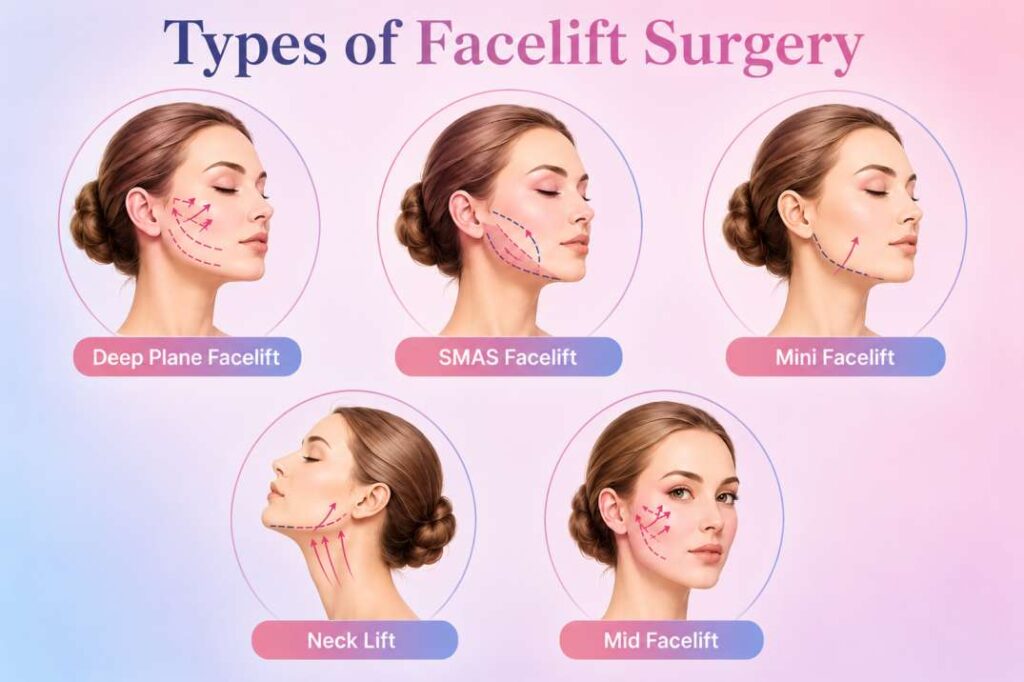
A Mid-Facelift focuses on lifting the cheeks and restoring volume to the middle portion of the face. By repositioning descended fat pads, it reduces under-eye hollowness and softens deep smile lines for a refreshed appearance.
A Lower Facelift improves the lower third of the face by addressing jowls, loose skin, and loss of jawline definition. It is often combined with a neck lift to achieve balanced facial rejuvenation.
Although technically a separate procedure, a Neck Lift is frequently performed alongside a facelift to tighten loose neck skin, improve muscle definition, and enhance the contour between the jawline and neck.
Choosing the right facelift technique depends on your facial anatomy, the severity of skin laxity, and your desired outcome
|
Technique |
Best For |
Primary Area Treated |
Recovery |
|
Mini Facelift |
Early signs of ageing |
Lower face and jawline |
Short |
|
SMAS Facelift |
Moderate facial ageing |
Mid and lower face |
Moderate |
|
Deep Plane Facelift |
Advanced facial ageing |
Mid-face, jawline, and neck |
Moderate |
|
Mid-Facelift |
Sagging cheeks |
Mid-face |
Moderate |
|
Lower Facelift |
Jowls and loose jawline |
Lower face |
Moderate |
|
Neck Lift |
Loose neck skin |
Neck and jawline |
Moderate |
A Step-by-Step Guide to the Facelift Procedure
Our streamlined process ensures you always know what comes next
Free first consultation
Enhancing Facial Rejuvenation with Complementary Treatments
Facelift surgery is often combined with other facial cosmetic procedures to achieve more balanced, natural-looking, and comprehensive rejuvenation.
| Procedure | Primary Concern Addressed | Benefit When Combined with a Facelift |
| Neck Lift | Loose neck skin, muscle bands, excess skin | Creates a smoother neck contour and enhances jawline definition. |
| Blepharoplasty (Eyelid Surgery) | Drooping eyelids, under-eye bags | Rejuvenates the eye area for a refreshed, youthful appearance. |
| Brow Lift | Sagging eyebrows, forehead wrinkles | Lifts the upper face and complements overall facial rejuvenation |
| Fat Transfer | Facial volume loss | Restores volume to the cheeks, temples, and under-eye area for natural-looking results |
| Liposuction | Excess fat beneath the chin or along the jawline | Refines facial contours and improves jawline definition in suitable candidate |
A simple, guided path from first contact to full recovery
Minimally invasive, patient-focused surgical care
Cost of Facelift Surgery in Turkey is around $3500-$7000, varies based on several factors, and Lifeline Turkey believes in full transparency rather than misleading flat prices.
Your final cost depends on:
Compared to the UK, Europe, or the Middle East, facelift surgery in Turkey is typically far more affordable while maintaining high clinical standards. For an accurate, personalized quote based on your needs, contact our team for a free assessment.
A Simple Step Towards Personalised Facelift Care
Considering facelift surgery (rhytidectomy) is the first step towards achieving a more youthful and refreshed appearance. At Lifeline Turkey, we connect international patients with experienced plastic surgeons and internationally accredited hospitals, offering personalised treatment plans, transparent pricing, and dedicated support throughout every stage of treatment.
Whether you're exploring a Mini Facelift, SMAS Facelift, or Deep Plane Facelift, our team is here to help you understand your options, expected recovery, and treatment costs. Book a consultation today to receive a personalised assessment and expert guidance tailored to your aesthetic goals.
Everything you need to know before your consultation
There's no single "best" age. Most patients are between 40 and 70, but suitability is based on skin condition, facial structure, and overall health rather than age.
Facelift incisions are carefully placed along the hairline and around the natural contours of the ears to make scars as discreet as possible. With proper healing and scar care, they usually become less noticeable over time.
You can usually wash your face 24 to 48 hours after surgery, or as advised by your surgeon. Use lukewarm water and a gentle cleanser, avoiding excessive rubbing or pressure on the incision sites until they have healed.
Facelift surgery may not be suitable for everyone. Individuals with uncontrolled medical conditions, active skin infections, poor wound healing, or unrealistic expectations may not be ideal candidates. Patients with very mild signs of ageing may achieve better results with non-surgical treatments. A consultation with a qualified plastic surgeon is essential to determine the most appropriate treatment.
Most patients can begin wearing makeup 2 to 3 weeks after surgery, once the incisions have healed sufficiently. Makeup should not be applied directly over healing incisions unless your surgeon confirms it is safe to do so.
If you are travelling from abroad for facelift surgery in Turkey, you may need a Medical Visa for Turkey or a tourist visa, depending on your nationality and the duration of your stay. Visa requirements vary by country, so it's important to check the latest entry regulations before planning your treatment.